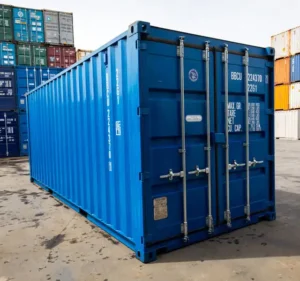

40ft Shipping Container vs 20ft: Which One Is Better for Storage and Transport?
When it comes to shipping goods across the ocean or finding a secure, weather-resistant storage solution on land, the humble shipping container is the undisputed king. However, once you’ve decided to invest in a container, you are immediately faced with the most common dilemma in the industry: 40ft Shipping Container vs 20ft.
While they may look identical apart from their length, the choice between a 20-foot and a 40-foot container can significantly impact your logistics costs, storage efficiency, and site preparation requirements. Whether you are a logistics manager planning a shipment or a homeowner looking for a backyard storage unit, making the wrong choice can lead to wasted space or unexpected delivery headaches.
In this comprehensive guide, we will break down the pros and cons of both sizes, compare their specifications side-by-side, and help you determine which container is the perfect fit for your needs.
The Basics: Understanding the Standard Sizes
Before diving into the “which is better” debate, it is crucial to understand what you are actually buying or renting. Shipping containers are built to ISO (International Organization for Standardization) specifications, ensuring they can be stacked, transported, and handled uniformly worldwide.
The 20ft Shipping Container (The Standard Unit)
The 20-foot container is often referred to as a TEU (Twenty-foot Equivalent Unit). It is the industry standard for measuring cargo capacity on ships.
- Exterior Length: 20 feet (6.06 m)
- Exterior Width: 8 feet (2.44 m)
- Exterior Height: 8 feet 6 inches (2.59 m)
- Approximate Floor Area: 150 sq. ft.
- Cubic Capacity: ~1,170 cubic feet.
The 40ft Shipping Container (The Volume King)
The 40-foot container is essentially double the length of the 20ft unit but maintains the same width and height. In shipping terms, it is often counted as 2 TEUs.
- Exterior Length: 40 feet (12.19 m)
- Exterior Width: 8 feet (2.44 m)
- Exterior Height: 8 feet 6 inches (2.59 m)
- Approximate Floor Area: 300 sq. ft.
- Cubic Capacity: ~2,390 cubic feet.
(Note: High Cube versions exist for both sizes, offering an extra foot of height, but for this comparison, we will focus on standard dimensions.)
Round 1: Storage Capacity and Volume
The most obvious difference in the 40ft Shipping Container vs 20ft battle is space. However, bigger isn’t always better; it depends entirely on what you are storing.
When the 20ft Container Wins
A 20ft container is roughly the size of a single-car garage. It is surprisingly spacious and can hold the contents of a standard 1-2 bedroom apartment.
- Ideal for: Storing garden tools, motorcycles, ATVs, document archives, or inventory for small businesses.
- Density: If you are storing heavy items like machinery parts, bags of cement, or dense metals, the 20ft container is superior. Shipping containers have weight limits. A 20ft container often has a similar maximum gross weight rating to a 40ft container. This means you can pack a 20ft container much denser than a 40ft one without exceeding weight restrictions.
When the 40ft Container Wins
A 40ft container offers double the volume and floor space. It is roughly the size of a two-car garage (parked in tandem).
- Ideal for: Storing contents of a 3-5 bedroom house, vehicles (you can fit two standard cars), construction materials like lumber and piping, or large volumes of lightweight retail inventory (clothing, electronics).
- Volume Efficiency: If your goods are bulky but light (like furniture or insulation), the 40ft container offers a much lower cost per cubic foot. You get 100% more space for usually only 30-40% more purchase price.
Winner:
- For Heavy/Dense Items: Buy 20ft Shipping Container.
- For Bulky/High-Volume Items: Buy 40ft shipping Container.
Round 2: Delivery and Site Preparation
This is the factor most buyers overlook until it is too late. You might have the budget for a 40ft container, but do you have the space to deliver it?
Delivery Challenges for 40ft Containers
Delivering a 40ft container requires a semi-truck with a long tilt-bed trailer.
- Straight Line Clearance: To offload a 40ft container, the driver typically needs about 100 to 120 feet of straight-line clearance. The truck must pull forward out from under the container as it slides off.
- Turning Radius: These trucks are massive. If your property has a narrow gate, winding driveway, or low-hanging power lines, a delivery truck carrying a 40ft box simply might not fit.
Delivery Ease for 20ft Containers
A 20ft container is much more maneuverable. It can be delivered on a smaller roll-back truck (similar to a tow truck) or a smaller trailer.
- Straight Line Clearance: You generally only need about 60 to 75 feet of straight-line space.
- Tight Spots: Because the delivery vehicle has a shorter wheelbase, it can navigate tighter residential streets and sharper turns.
Winner: 20ft Container. It is far easier to place in residential areas or crowded construction sites.
Round 3: Cost Efficiency (Price Per Square Foot)
Economics play a huge role in the decision-making process. The pricing dynamic between these two sizes is interesting and often counter-intuitive.
Purchase Price
You might expect a 40ft container to cost double the price of a 20ft container, but that is rarely the case.
- The Price Gap: typically, a 40ft container costs only about 20% to 35% more than a 20ft container.
- Why? Manufacturing costs and steel usage don’t double perfectly, and supply and demand fluctuate.
The Value Proposition
If you look at the Cost Per Square Foot, the 40ft container is the clear winner.
- Hypothetical Example: If a used 20ft container costs $2,500, you are paying roughly $16.60 per sq. ft. If a used 40ft container costs $3,500, you are paying roughly $11.60 per sq. ft.
Transport Costs
While the purchase price favors the 40ft unit for value, the transport cost favors the 20ft. Moving a 40ft container requires larger trucks and more fuel. If you plan on moving the container frequently from site to site, the higher transport fees of the 40ft unit will add up quickly.
Winner: 40ft Container (for static storage value).
Round 4: Security and Modifications
Both container sizes offer excellent security. They are made of corten steel, are water-tight, and are difficult to break into without heavy-duty power tools. However, their modification potential differs.
Modifying a 20ft Container
The 20ft container is the darling of the “tiny home” movement. Its compact footprint makes it easier to insulate, heat, and cool. It requires less energy to maintain a climate-controlled environment. It is also easier to secure on a foundation because it requires fewer footings.
Modifying a 40ft Container
The 40ft container is ideal for larger projects: multi-room offices, pop-up shops, or larger container homes. However, modifying them requires more structural reinforcement if you plan to cut out large sections of the walls. Additionally, keeping a 40ft steel box cool in the summer or warm in the winter requires a significantly more robust HVAC system than a 20ft unit.
Winner: Tie. It depends entirely on the scope of your project.
Round 5: International Shipping Logistics
If your goal is transport rather than storage, the rules change slightly. Ocean freight rates fluctuate wildly, but the efficiency of the container size depends on your cargo.
Weight vs. Volume in Shipping
In ocean freight, you pay for the slot on the ship.
- Heavy Cargo: If you are shipping incredibly heavy items (scrap metal, stone, liquids in drums), you will hit the maximum weight limit of the container long before you fill it to the roof. In this case, paying for a 40ft slot is a waste of money. You should use a 20ft container.
- Light Cargo: If you are shipping consumer goods (toys, clothes, furniture), you will fill the space before you hit the weight limit. In this scenario, the 40ft container is vastly more economical because you ship double the goods for less than double the freight rate.
Winner: Context Dependent. (20ft for heavy goods, 40ft for volume goods).
Summary Table: 40ft shipping container vs 20ft at a Glance
To make your decision easier, here is a quick comparison of the key factors:
| Feature | 20ft Shipping Container | 40ft Shipping Container |
|---|---|---|
| Exterior Length | 20 Feet | 40 Feet |
| Floor Space | ~150 sq. ft. | ~300 sq. ft. |
| Storage Capacity | 1-2 Bedroom Home | 3-5 Bedroom Home + Car |
| Delivery Space Needed | ~60-75 ft straight clearance | ~100-120 ft straight clearance |
| Maneuverability | High (Good for tight spots) | Low (Needs large turning radius) |
| Price Per Sq. Ft. | Higher | Lower (Better Value) |
| Best For | Heavy items, tight spaces, small storage | Bulky items, large sites, max value |
Which One Should You Choose?
The battle of 40ft Shipping Container vs 20ft doesn’t have a single winner; it has a right answer for your specific situation.
Choose the 20ft Container If:
- Space is Tight: You have a small driveway, a backyard with limited access, or a construction site with a small footprint.
- Your Goods are Heavy: You are storing or transporting dense materials like tile, cement, or machinery.
- You Need Mobility: You plan on moving the container frequently between different job sites.
- Budget is Fixed: You have a strict upper limit on your immediate spending and cannot stretch to the higher absolute price of a 40ft unit.
Choose the 40ft Container If:
- You Have the Room: You have ample land and a wide, straight driveway for delivery.
- Value is Priority: You want the most storage space for your dollar.
- Your Goods are Bulky: You are storing furniture, cars, or general household goods that take up space but aren’t excessively heavy.
- Long-Term Static Storage: You plan to drop the container once and leave it there for years.
Final Thoughts on 40ft shipping container vs 20ft shipping container
Before you pull the credit card out, we highly recommend walking your delivery site with a tape measure. The number one reason for failed container deliveries is a lack of clearance for the truck. If you are unsure, take photos of your site and send them to your container supplier.
Whether you choose the compact versatility of the 20ft or the massive capacity of the 40ft, shipping containers offer a durability and security that traditional sheds and storage units simply cannot match.